
Colorectal Cancer Screening
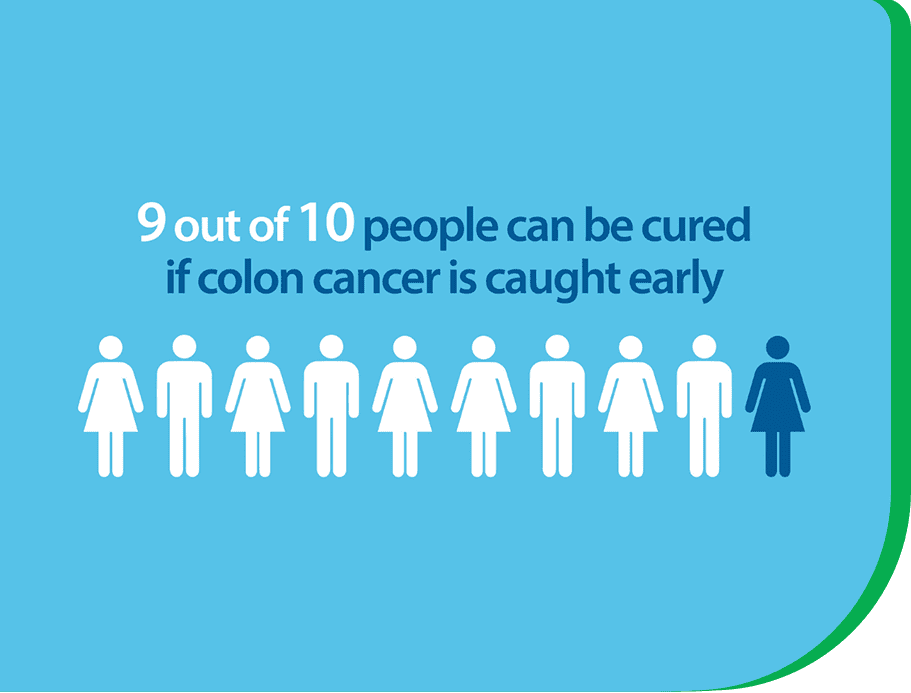
When colorectal cancer is caught early, 9 out of 10 people can be cured. Getting screened for colorectal cancer helps to find cancer early when it is more likely to be cured.
SPECIAL ANNOUNCEMENT
Starting July 1, 2026, colorectal cancer screening will begin at age 45 for average-risk individuals. If you have a family history of colorectal cancer, talk to your primary care provider about when to start screening.
Colorectal Cancer Screening for Early Detection
The colon and rectum are part of your digestive system. Cancer can happen in any part of your colon or rectum. This may be called "colorectal cancer" or "bowel cancer".
Most people can do colorectal cancer screening in the privacy of their own home using a fecal immunochemical test (FIT).
Colorectal Cancer Screening (Average Risk)
If you are between 45 to 74 years of age, use a FIT kit to test for colorectal cancer every 2 years. The FIT kit is an easy at-home stool (poop) test used to check for signs of colorectal cancer. The test only takes a few minutes. You can eat, drink, and take your medications as usual before and after the test.
Ask your family doctor or nurse practitioner to have a FIT kit mailed to your home.
You will receive a letter from Cancer Care Ontario with your FIT kit result. A "positive" result does not mean you have cancer. Ask your family doctor or nurse practitioner about further testing with a colonoscopy.
Colorectal Cancer Screening (Elevated Risk)
You have an increased risk of colorectal cancer if an immediate family member (mother, father, brother, sister, or child) had or has colorectal cancer. Talk to your family doctor or nurse practitioner about your family's history of any cancer.
Your family doctor or nurse practitioner should refer you for a screening test called a colonoscopy. You need to have your first colonoscopy at age 40 or 10 years earlier than the age your family member was diagnosed with colorectal cancer, whichever comes first. You should have a colonoscopy every 5 years.

What is a Colonoscopy:
A colonoscopy is a procedure using a long tube with a camera, called a colonoscope. The colonoscope allows your doctor to see your large intestine (colon) and rectum. Your doctor will be able to see and diagnose conditions such as polyps, tumors, inflammation and other abnormalities in your colon. During the colonoscopy, your doctor may take tissue samples (biopsies) or remove polyps for testing. If you have a family history of colorectal cancer or if your FIT kit result is positive, you will be sent for a colonoscopy.
Talk to your doctor about how to prepare for your colonoscopy.
How to get screened if you do not have a family doctor or nurse practitioner:
Call 811 to request a FIT kit if you do not have a family doctor or nurse practitioner.
Register with Health Care Connect to be connected with a Primary Care Provider in your community: Find a doctor or nurse practitioner | ontario.ca
For more information on screening for colorectal cancer.